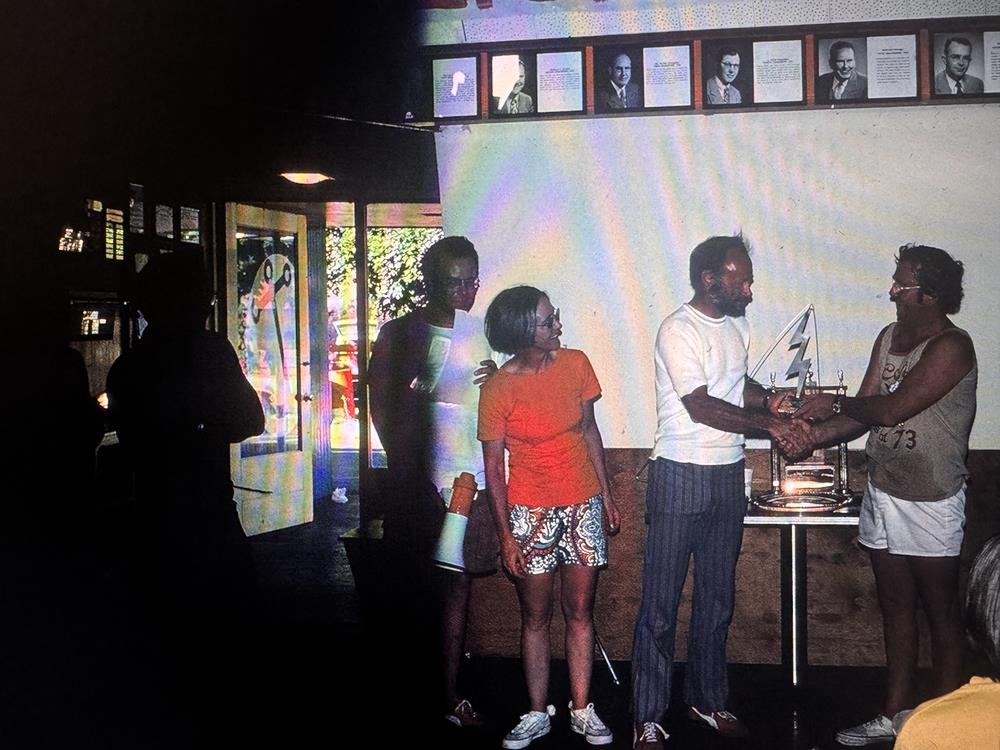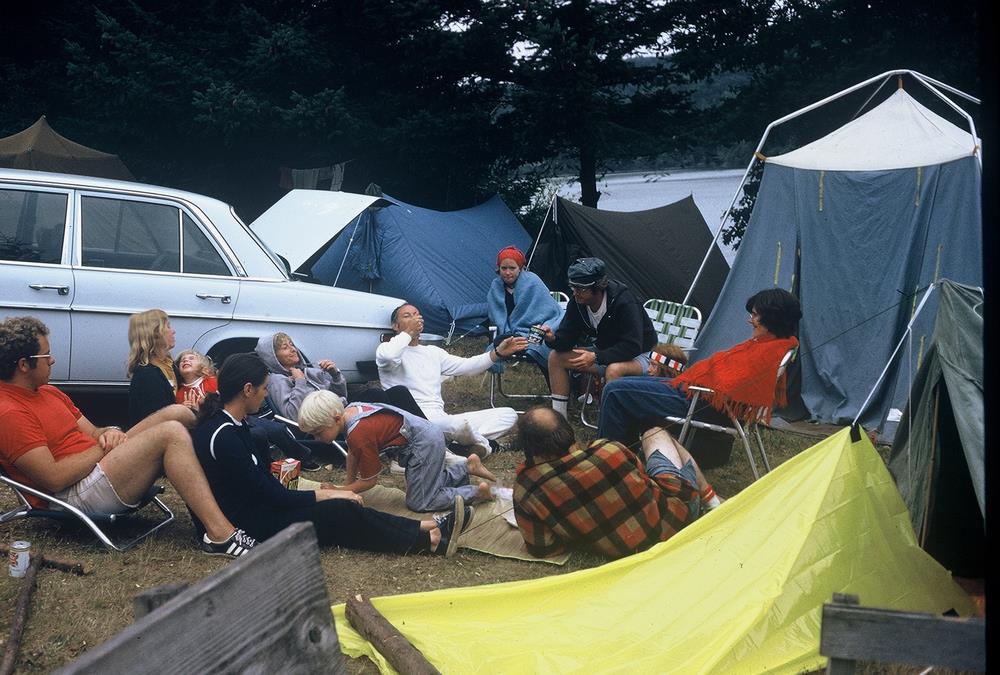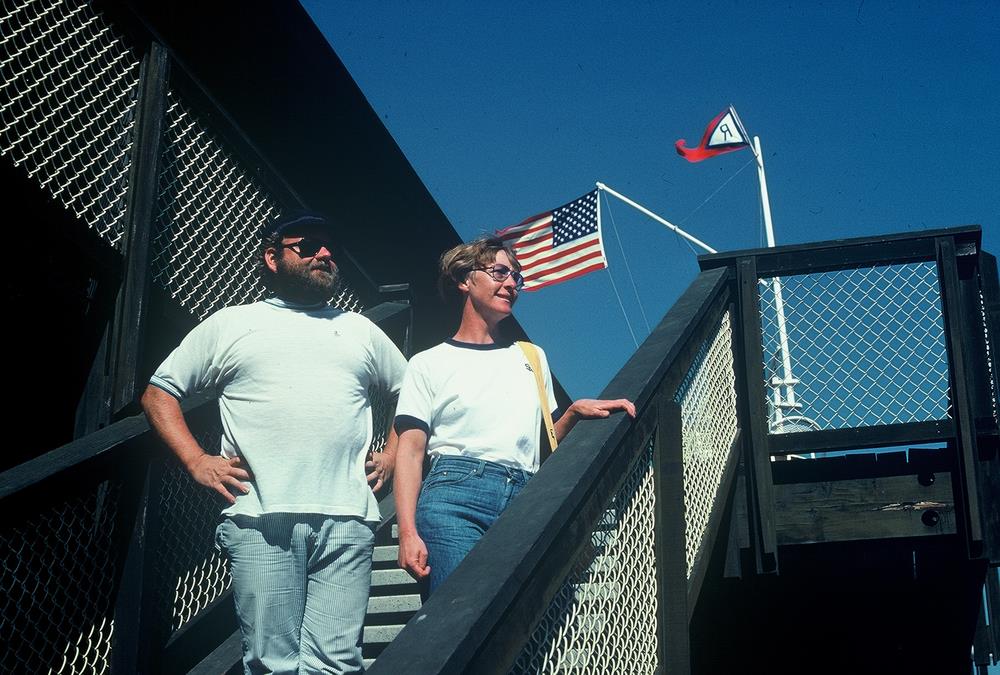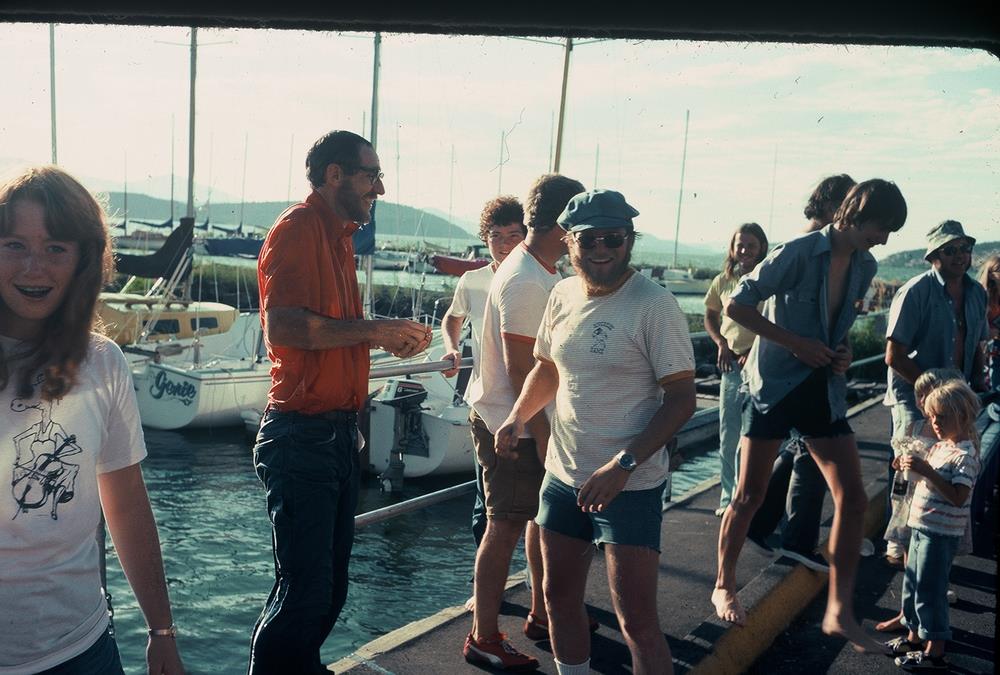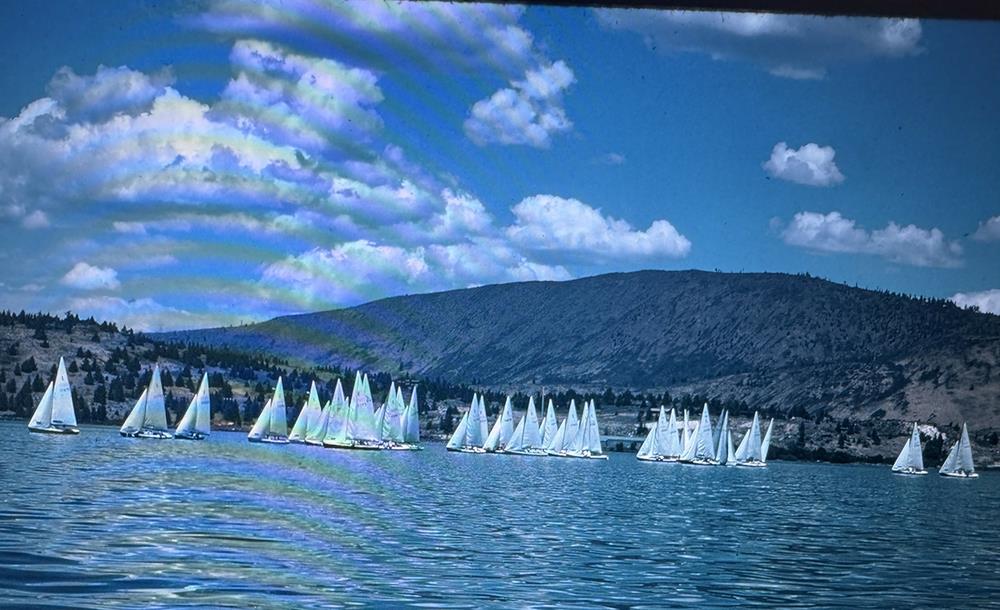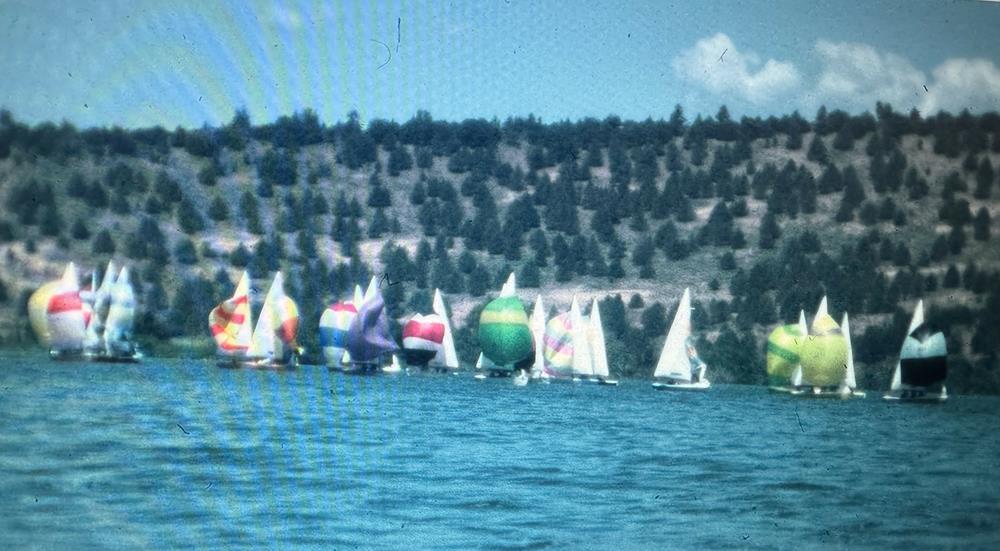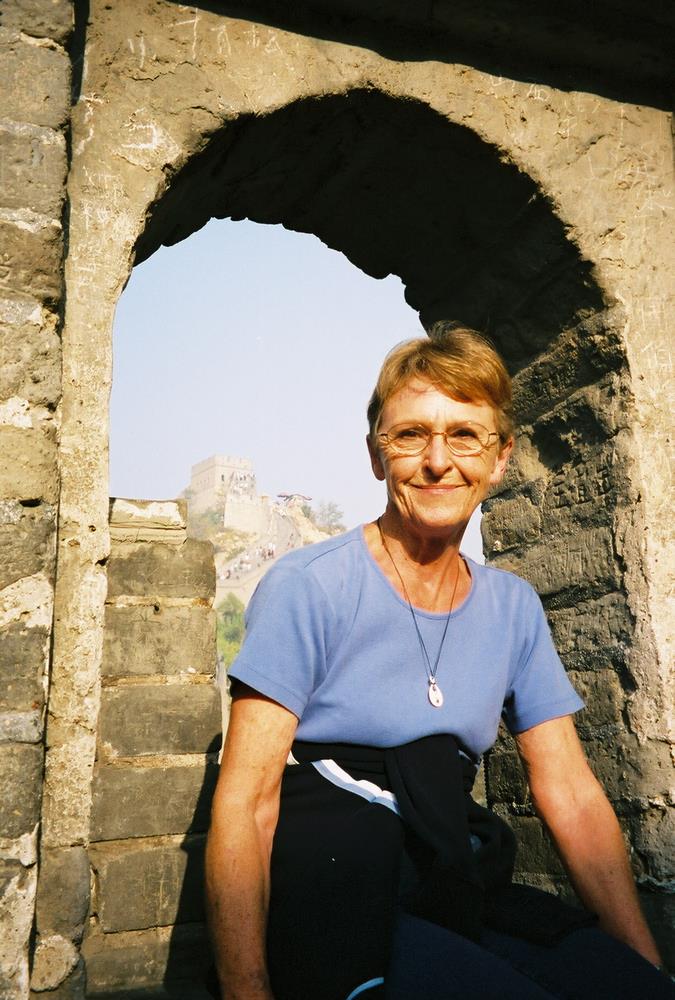
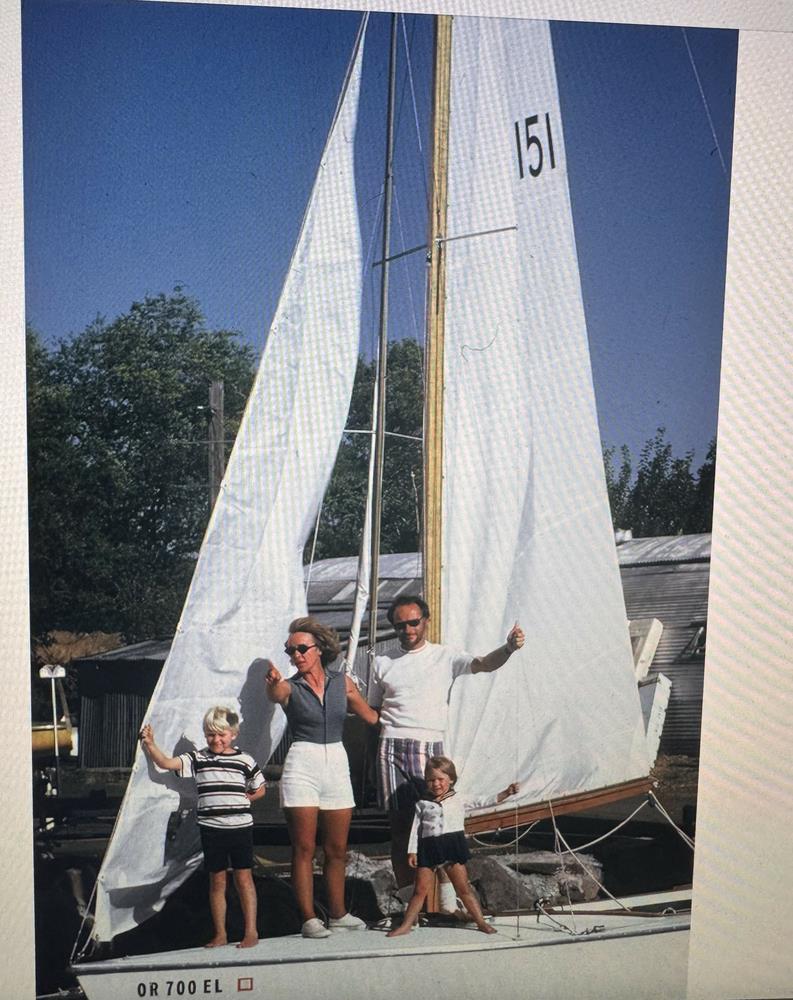
Virginia White (Left) White Family on #11151 (Right)
Growing Up Lightning
Hi folks.
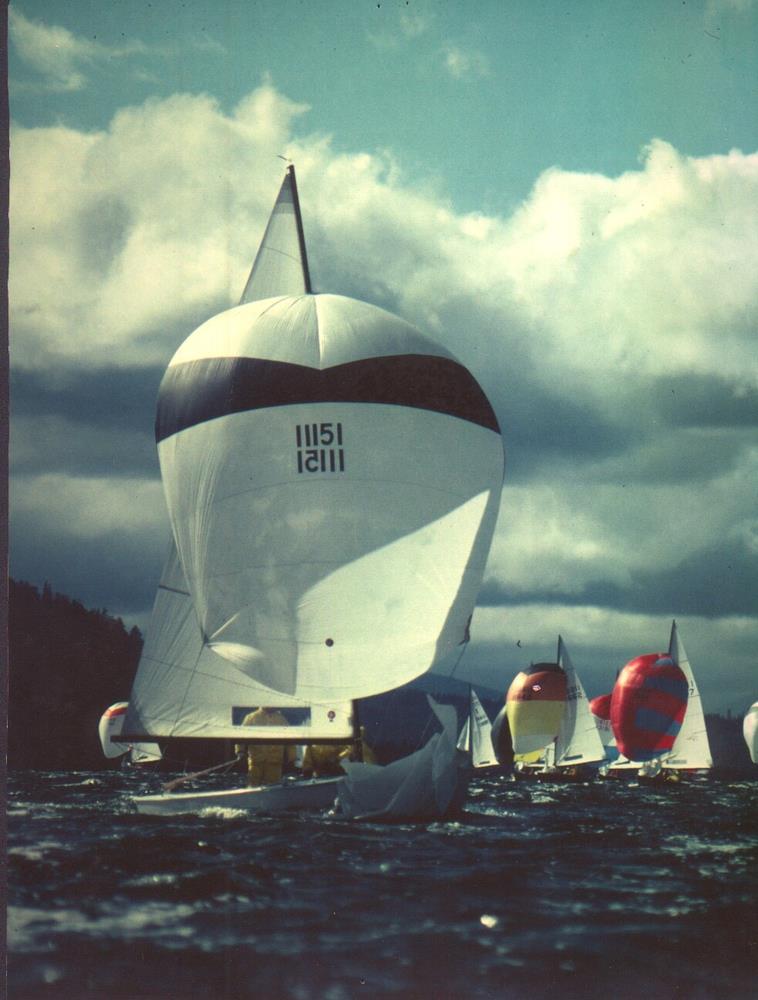
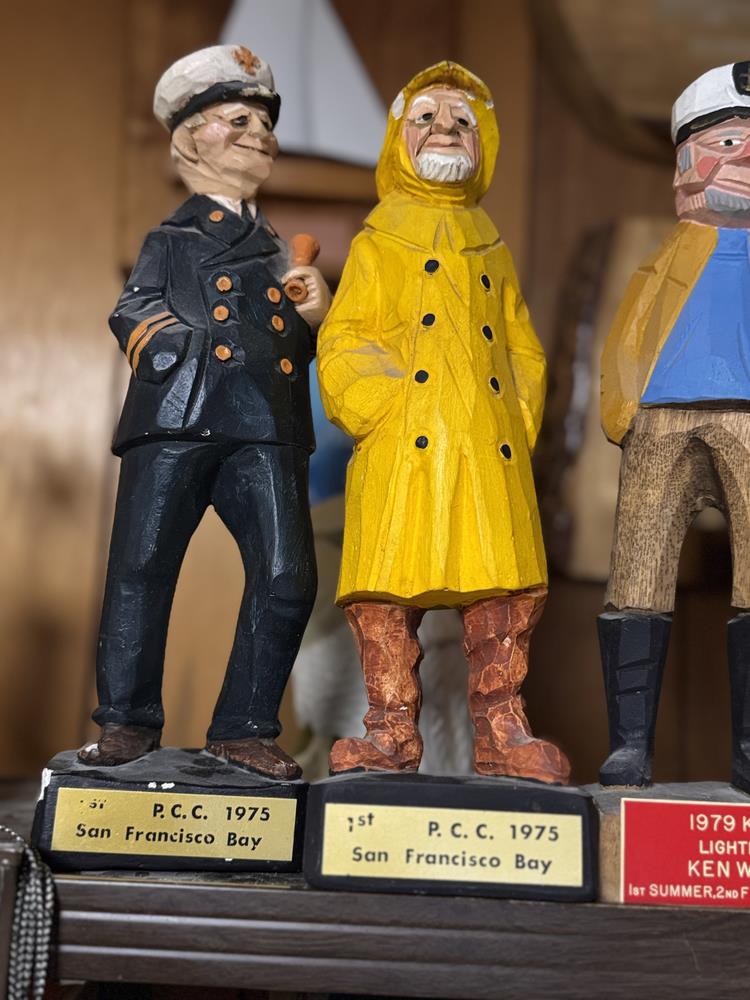
My mom, Virginia White, crewed for my father, Ken White, for at least a decade—and probably longer—in Lightning Class Fleet 455 on Klamath Lake in Klamath Falls, Oregon sail number 11151. They qualified for and raced in the national championships, they won the Pacific Coast Championship in 1975 and placed second and third in two or three other Pacific Coast championships.
Mom passed away last night. (September 25 at 2:15 in the morning.)
Although I’ve titled this Growing Up Lightning, this is really about Mom. Because for much of my early childhood, sailing was what Mom and Dad did. Dad played jazz saxophone and taught music; thus, their boat was named SAXY. Spinnakers, jazz, sail number 11151—those were the sounds and sights of our family life. Sailing shaped many of our family trips, most of our camping, and a whole lot of memories both on and off the water.
But instead of spending the next several minutes moping and telling you how much I miss her, or how much she meant to me—and I could—I’d rather tell you a little about how much you people, you soggy, rope-burned, head-conked, …nuts … uh … people, meant to her. To both of them.
Instead of crying in our beer—my mother was a well-established non-beer crier—let’s have a little fun, shall we?
One of my earliest and fondest childhood memories begins inside a tent at Fern Ridge Reservoir, home of the Eugene Yacht Club in Eugene, Oregon. It seems like they might do something of athletic significance in Eugene these days, but it escapes me at the moment.
I digress.
I was still zipped up in my sleeping bag, listening to Mom and Dad outside. I could smell bacon cooking. Around them were familiar voices I’d heard at regattas so many times that, even as a kid, I could identify people without seeing them.
At some point, one of the guys—perhaps Herman “Smoke” Fisher or local Klamath Lightning character Dick Marlette—asked somebody else:
“How about a beer?”
It was about seven o’clock in the morning.
It was a joke.
Barely …
We camped pretty comfortably by 1970s standards. Mom had brought folding lawn-chair loungers for my sister Gretchen and me to put our sleeping bags on, so we weren’t lying directly on the ground. We had good pillows and those big, heavy White Stag sleeping bags that were wonderfully warm and comfortable right up until they got wet. Then they seemed to weigh approximately the same as a certain capsized nineteen-foot sailboat, which will remain nameless.
Ahem.
But that morning, I remember lying there feeling completely comfortable and completely happy. Without realizing it yet, I was growing up Lightning.
There was the aforementioned “Smoke” Fisher. (For the record, there were a bizarre number of Fishers and Fischers in the Portland-area Lightning world then, so if I’ve misidentified someone, I apologize.) But I remember this Fisher as one of the funniest people around, equipped with an apparently inexhaustible supply of jokes—many of which probably shouldn’t be repeated in Flashes.
Besides Mr. Fischer, there was quite literally a 1970s murderers’ row of really good Pacific Northwest sailors: John DeBenedetti, Greg Zettler, Dennis Torgeson, Phil Parshley, Bruce Deitz, Marty Lyon and, of course, my mom and dad, Ken and Virginia White.
These weren’t just names on a results sheet. To me, they were the voices outside the tent. They were the people standing around the campground, working on boats, eating breakfast, telling stories and laughing—with the occasional protest committee thrown in—after the races. The competition in the Pacific Northwest in those years could be brutal. Mom and Dad won plenty, and they finished second or third or fourth plenty, because when you lined up against sailors like that, nobody was handing anybody anything. That’s one of the things I remember most clearly. They weren’t simply racing sailboats. They were racing each other. Chess, not checkers, baby.
And when the race was over, everybody came back to shore together. Folks ate and … uh … well, quenched their thirst, shall we say? But they came to race, and racing stayed first and foremost in everybody’s mind.
The racing was serious. What interests me now is that my folks, the Zettlers and the Torgesons—and probably the DeBenedettis—were husband-and-wife teams, as I remember it. And honestly, I think it went pretty well. I know it did for my folks.
Mom and Dad made a great team. She was a tough, no-nonsense woman, and he was smart enough to listen to her, tactically speaking. Dad was great at reading the wind and playing chess inside that boat. Part of the reason he was great was that he had my mom. I read an excerpt from Lightning Flashes in which the writer called him “the master of the wind shifts.” That may have been true, but he was also a master of knowing which way the wind was blowing inside the cockpit. Call it democracy, good leadership or teamwork. I knew my mother, and I call it survival.
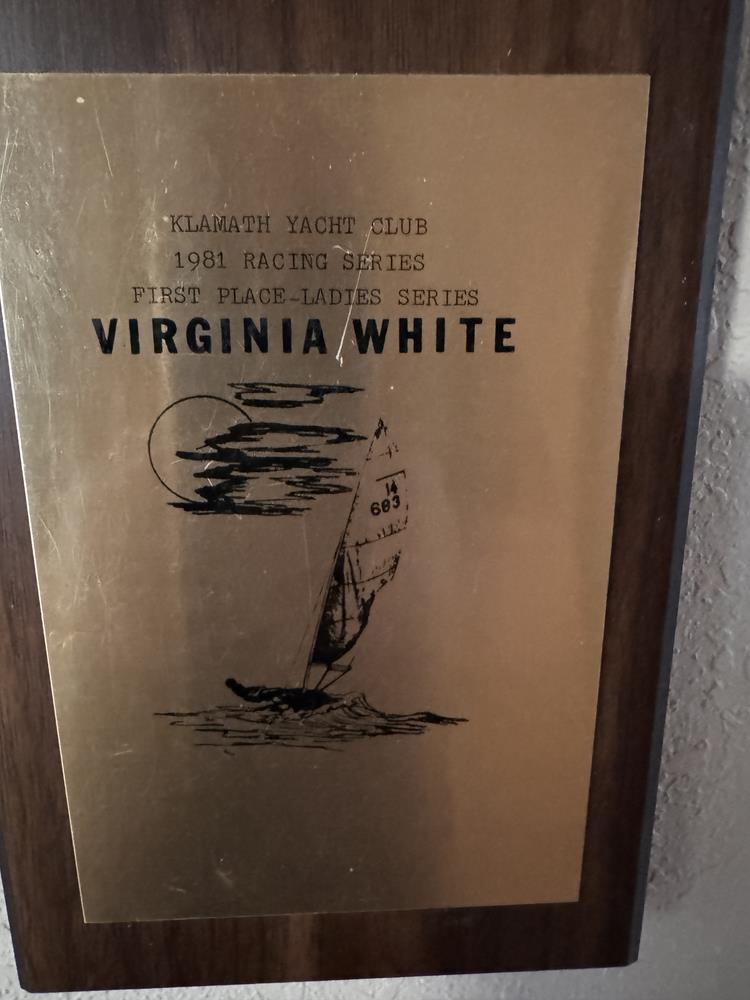
Mom wasn’t merely Dad’s crew, either. She was a sailor. She raced the Ladies’ Series herself on Klamath Lake, and she won more than once. I was proud of her. I was proud of both of them. Sailing was woven through their marriage for a decade or more.
Competition has an interesting effect on two people who love each other.
Sometimes it pulls them closer together.
Sometimes, somewhere between a missed wind shift and a bad mark rounding, it moves them temporarily a little farther apart—and then pulls them together again. Anyone who has ever raced seriously with a spouse probably understands exactly what I mean.
Mom and Dad spent all those hours together in a nineteen-foot sailboat solving problems: wind shifts, starts, mark roundings, spinnaker-pole jibes, right of way and tactical decisions. They had arguments that lasted three minutes or thirty, and stories that lasted forty years.
They competed together. They traveled together. They raised us around all of these people. Heck, when we were younger, some of those sailors’ older kids were our babysitters. Somewhere along the way, the Lightning Class became part of the architecture of our family for the better part of my childhood.
That’s why, when I think about my mother now, I don’t want my strongest image of her to be from the final days of her life.
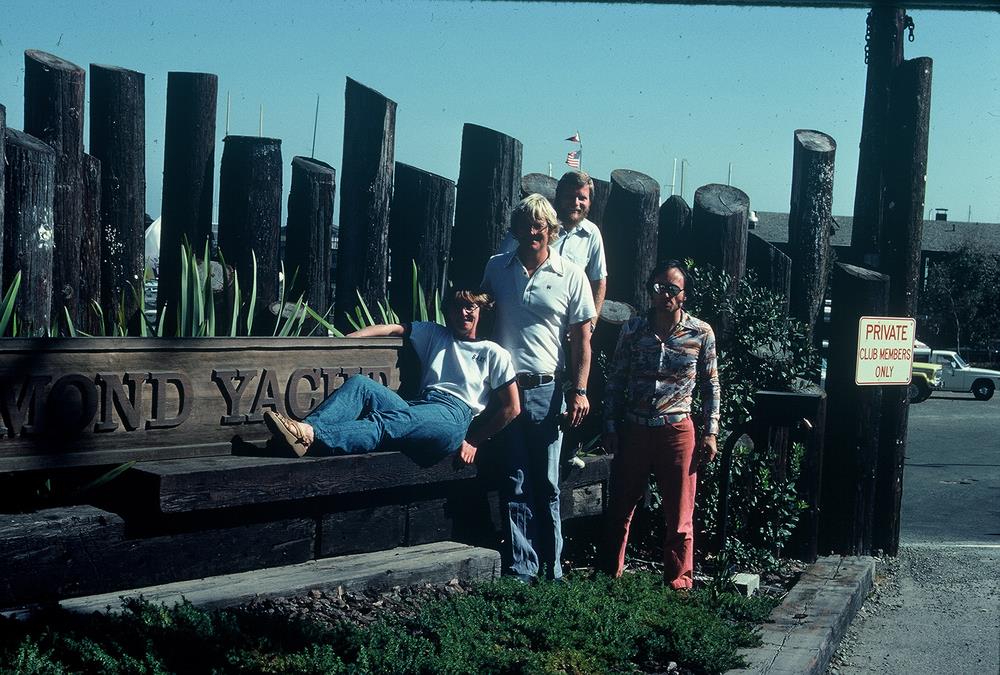
I would much rather see her sitting next to Dad in Lightning sail number 11151, SAXY. Or standing around a campsite at Fern Ridge, Whiskeytown, Howard’s Prairie, Richmond Yacht club on San Francisco Bay, Vancouver Yacht Club: her hair wet, her lower half draped in a yellow wetsuit, fingerless gloves still on her hands as she mixed spaghetti over the Coleman stove.
Or I’d see her sailing her own race on Klamath Lake while Dad crewed for her and let her take the lead. Pretty successfully, actually. Again, call it being a good husband. I call it survival. Dad was no dummy.
As the ’80s came, Mom developed a back problem, and the end of her sailing career was near. Dad kept going for a few years, but he didn’t have the heart to do it without her. It was always their thing. The third crew member was always a good friend, someone who knew what they were doing, but the core was Mom and Dad. I got to race with them once or twice, and before I close, I would be remiss if I didn’t tell this story:
Mom, Dad and I had somehow gotten out in front of Portland, Oregon’s own “Father Lightning,” John DeBenedetti.
Way out in front.
This was a big deal to sixteen-year-old me. Zettler, DeBenedetti, Fisher and my dad were my one-design Mount Rushmore, and we were beating Teddy Roosevelt’s butt … sigh … I repeat … siiiiigh …
We came around the last mark with DeBenedetti behind us, and I thought, we’ve got him.
Then, while stuffing the spinnaker into its basket, I dropped it in the water with the halyard still attached.
In. The. Water.
Whatever heroic sailing accomplishment I had imagined I was participating in rapidly became something more closely resembling commercial fishing.
I’m pretty sure John yelled something encouraging—I remember him being a very sweet guy—but he definitely sailed right on by.
Welcome to Lightning racing.
And that was the thing about growing up around this class: you learned very quickly that there was always somebody faster, somebody smarter, somebody who caught the shift you missed—and somebody waiting at the dock afterward to give you a hard time about it.
I want to remember bacon cooking in the morning.
Wet White Stag sleeping bags.
A blue-and-white striped tent.
Boats being rigged, and the soft (or not so soft), ever-present clang, clang, clang of mainsail halyard fittings bouncing against aluminum masts. Somehow, it never kept me awake. It was music: an arrhythmic soundtrack to those parts of my childhood. For the past forty years, when the right bit of metal has bounced off the right bit of metal, anytime, anywhere, it has sent me back to those summer evenings, that sleeping bag, those people and those boats.
To people laughing.
Someone asking if anybody wanted a beer for breakfast.
And my parents being young.
My mother was Virginia White.
She was my mom, my dad’s wife, teammate, partner and best friend.
And for a very important part of her life—and mine—she was a Lightning sailor.
Thanks for giving Mom and Dad, and all of us, such a wonderful set of memories.
~David White